
Calories in Corn
Corn is a versatile grain, often consumed as a vegetable. It's a good source of energy, dietary fiber, and various vitamins and minerals, including Vitamin C, B vitamins, and potassium. Its natural sweetness makes it a popular addition to many dishes.
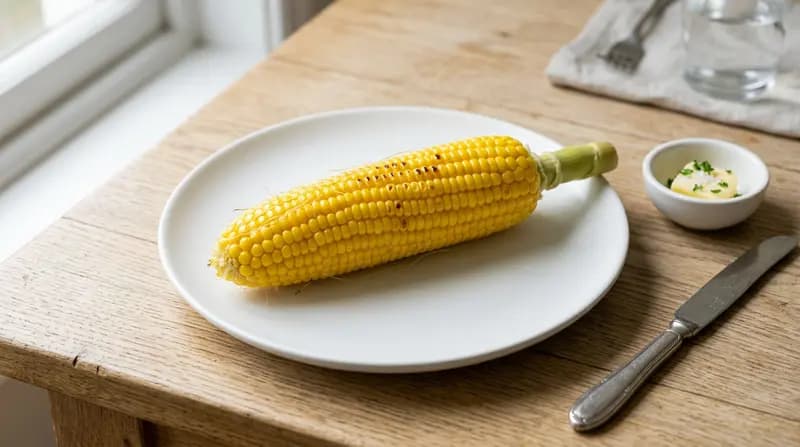
Track calories for Corn with a photo


Common Variations
| Variation | Serving | Calories | Protein | Carbs | Fat |
|---|---|---|---|---|---|
| 1 cup (154g) | 1 cup (154g) | 132 | 5g | 29.3g | 1.8g |
| 100 g | 100 g | 86 | 3.2g | 19g | 1.2g |
| 1 oz (28g) | 1 oz (28g) | 24 | 0.9g | 5.4g | 0.3g |
| 1 small ear (5-1/2" to 6-1/2" long) (73g) | 1 small ear (5-1/2" to 6-1/2" long) (73g) | 63 | 2.4g | 13.9g | 0.9g |
| 1 large ear (7-3/4" to 9" long) (143g) | 1 large ear (7-3/4" to 9" long) (143g) | 123 | 4.6g | 27.2g | 1.7g |
Health Benefits
Rich in Antioxidants: Corn contains antioxidants like ferulic acid and anthocyanins (especially in colored varieties) that help protect cells from damage.
Good Source of Fiber: Its high fiber content aids in digestive health, promotes satiety, and can help regulate blood sugar levels.
Provides Essential Nutrients: Corn delivers important vitamins and minerals, including B vitamins (thiamine, niacin, folate), Vitamin C, magnesium, and potassium, which are vital for overall bodily functions.
Nutrition Tips
- Enjoy corn in moderation as part of a balanced diet, as it's higher in carbohydrates than some other vegetables.
- Opt for fresh or frozen corn over canned varieties to avoid added sodium and preserve more nutrients.
- Pair corn with protein sources like beans or chicken to create a more balanced meal and help regulate blood sugar.
- Incorporate corn into salads, salsas, or stir-fries for added sweetness, texture, and fiber.
- If consuming corn on the cob, avoid excessive butter or salt to keep it a healthy side dish.
GAYA Tracking Tip
For accurate tracking of corn, especially when served on the cob or as part of a mixed dish, try to estimate the quantity of kernels. If it's on the cob, photograph it clearly before eating, and GAYA can help estimate the serving size.
Frequently Asked Questions
Is corn a healthy vegetable, or is it too high in sugar?+
Corn is indeed a healthy vegetable, offering fiber, vitamins, and minerals. While it contains natural sugars, it also provides complex carbohydrates and fiber, which help moderate its impact on blood sugar. Enjoying it in moderation is key.
How does the nutritional value of fresh corn compare to canned or frozen corn?+
Fresh, frozen, and canned corn all retain good nutritional value. Frozen corn is often picked at its peak and flash-frozen, preserving most nutrients. Canned corn can be slightly lower in some vitamins due to processing and may contain added sodium, so rinsing it is recommended.
Can people with diabetes eat corn?+
Yes, people with diabetes can eat corn as part of a balanced diet. It's a source of carbohydrates, so portion control is important. Pairing corn with protein and healthy fats can help slow down glucose absorption and manage blood sugar levels effectively.
Track calories for Corn with a photo