
Calories in Daikon Radish
Daikon is a mild-flavored winter radish characterized by its long, white, root-like appearance and crisp texture. It is exceptionally low in calories while being a good source of Vitamin C and digestive enzymes like diastase.
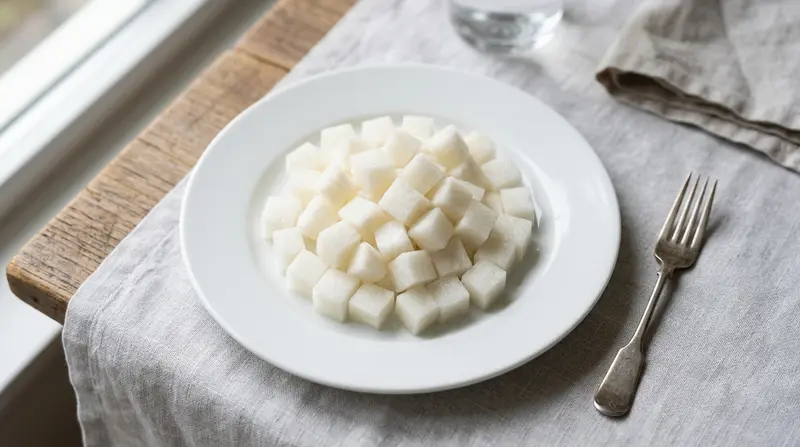
Track Daikon Radish calories with just a photo
Snap a photo of your food — GAYA calculates calories, protein, carbs, and fat in seconds.
Download GAYA
Common Variations
| Variation | Serving | Calories | Protein | Carbs | Fat |
|---|---|---|---|---|---|
| 100 g | 100 g | 19 | 0.6g | 4.3g | 0.1g |
| 1 oz (28g) | 1 oz (28g) | 5 | 0.2g | 1.2g | 0g |
| 1 serving (74 g) | 1 serving (74 g) | 14 | 0.5g | 3.2g | 0.1g |
Health Benefits
Supports digestive health through high levels of amylase and protease enzymes.
Strengthens the immune system due to its high Vitamin C and antioxidant content.
Acts as a natural diuretic, helping the body eliminate excess water and toxins.
Nutrition Tips
- Eat daikon raw to preserve its heat-sensitive digestive enzymes and Vitamin C content.
- The lower part of the radish is usually more pungent, while the top near the leaves is sweeter.
- Do not peel the skin if it is thin, as it contains beneficial nutrients and fiber.
- Use grated daikon as a garnish for oily foods to help stimulate fat digestion.
- Store daikon in a plastic bag in the refrigerator to keep it crisp for up to two weeks.
GAYA Tracking Tip
When logging daikon, photograph it sliced or grated next to a common object like a fork. GAYA can accurately estimate the volume of white root vegetables when their surface area is clearly visible.
Frequently Asked Questions
Is daikon radish keto-friendly?+
Yes, daikon is very keto-friendly. With only about 2.5g of net carbs per 100g, it is an excellent low-carb substitute for potatoes in soups and stews.
Does cooking daikon change its nutritional value?+
Cooking reduces the Vitamin C content and deactivates certain digestive enzymes. However, it makes the fiber easier to digest for some people and mellows the sharp flavor.
Can you eat daikon leaves?+
Absolutely. Daikon leaves are highly nutritious, containing more Vitamin C, calcium, and iron than the root itself. They can be sautéed or added to soups.
Track Daikon Radish calories with just a photo
Snap a photo of your food — GAYA calculates calories, protein, carbs, and fat in seconds.
Download GAYA