
Calories in Parmesan Cheese
Parmesan cheese is a hard, granular cheese made from cow's milk and aged for a minimum of 12 months. It is known for its rich, sharp, and salty flavor. Nutritionally, it's a good source of protein and calcium, with a moderate fat content and very few carbohydrates.
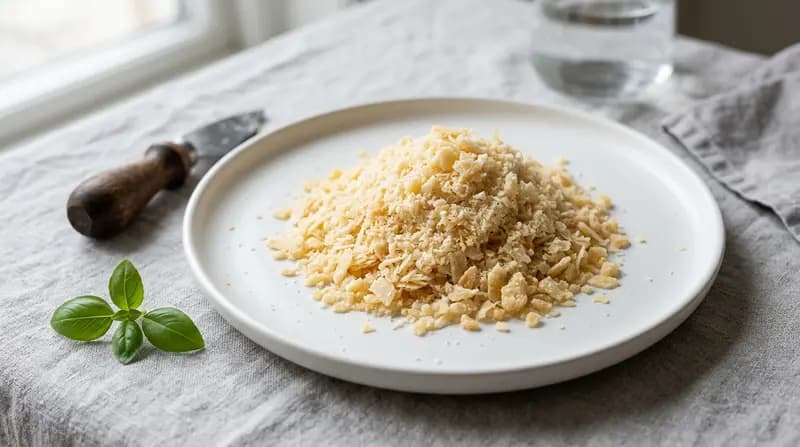
Track calories for Parmesan Cheese with a photo


Common Variations
| Variation | Serving | Calories | Protein | Carbs | Fat |
|---|---|---|---|---|---|
| 1 tbsp (5g) | 1 tbsp (5g) | 21 | 1.9g | 0.2g | 1.4g |
| 1 oz (28g) | 1 oz (28g) | 118 | 10.7g | 1g | 7.8g |
Health Benefits
Rich in calcium, which is essential for strong bones and teeth.
High protein content supports muscle growth and repair.
Contains beneficial probiotics that can aid in gut health due to its aging process.
Nutrition Tips
- Use Parmesan cheese sparingly due to its high sodium content, especially if you are monitoring blood pressure.
- Grate fresh Parmesan over dishes instead of using pre-packaged varieties to enhance flavor with less quantity.
- Pair Parmesan with whole-grain pasta or vegetables to add protein and calcium to a balanced meal.
- Be mindful of portion sizes; a small amount can add significant flavor and calories.
- Consider Parmesan as a flavor enhancer rather than a main ingredient to manage fat and calorie intake.
GAYA Tracking Tip
When tracking Parmesan cheese, specify whether it's grated or shredded, and estimate the volume (e.g., '1 tablespoon grated' or '1/4 cup shredded') for the most accurate calorie and macro count. GAYA can often distinguish between forms if clearly visible.
Frequently Asked Questions
How many calories are in a typical serving of Parmesan cheese?+
A standard 1-ounce (28g) serving of Parmesan cheese contains approximately 119 calories. This can vary slightly based on the brand and specific aging process, but it's a good estimate for tracking.
Is Parmesan cheese a good source of protein?+
Yes, Parmesan cheese is an excellent source of protein. A 1-ounce (28g) serving provides about 10.6 grams of protein, making it a valuable addition to meals for muscle support and satiety.
Does Parmesan cheese contain a lot of sodium?+
Parmesan cheese is relatively high in sodium. A 1-ounce (28g) serving contains about 336 mg of sodium, which is a significant amount. Individuals on a low-sodium diet should consume it in moderation.
Track calories for Parmesan Cheese with a photo