
Calories in Butter
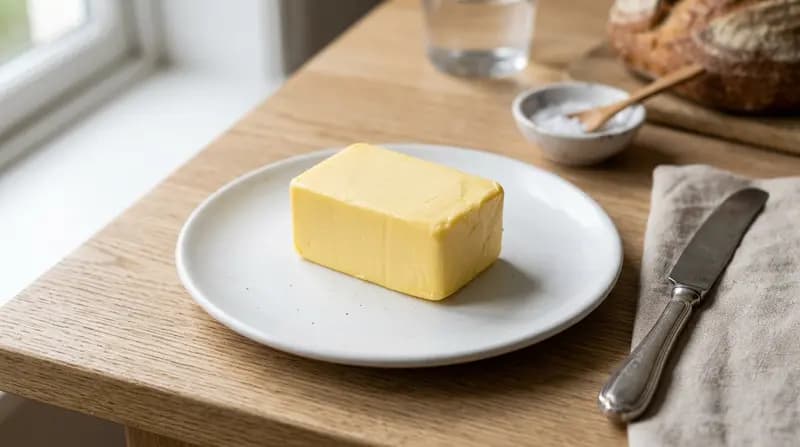
Butter is a dairy product made from churning fresh or fermented cream or milk. It is primarily composed of butterfat, water, and milk proteins. Known for its rich flavor and smooth texture, butter is a concentrated source of energy, mainly from saturated fats.
Track calories for Butter with a photo


Common Variations
| Variation | Serving | Calories | Protein | Carbs | Fat |
|---|---|---|---|---|---|
| 1 tbsp (14g) | 1 tbsp (14g) | 102 | 0.1g | 0g | 11.5g |
| 1 pat (1" sq, 1/3" high) (5g) | 1 pat (1" sq, 1/3" high) (5g) | 36 | 0g | 0g | 4.1g |
| 1 oz (28g) | 1 oz (28g) | 203 | 0.2g | 0g | 23g |
Health Benefits
Contains fat-soluble vitamins like A, D, E, and K2, which are important for bone health, vision, and immune function.
Provides conjugated linoleic acid (CLA), a type of fatty acid that may have potential anti-cancer and anti-inflammatory properties.
A source of butyrate, a short-chain fatty acid that can support gut health and reduce inflammation in the digestive tract.
Nutrition Tips
- Use butter sparingly due to its high calorie and saturated fat content.
- Opt for unsalted butter when cooking to better control sodium intake, especially if you're monitoring blood pressure.
- Consider using butter as a flavor enhancer rather than a primary cooking fat for healthier meal preparation.
- Pair butter with whole grains or vegetables to add healthy fats and improve nutrient absorption.
- Store butter properly in the refrigerator to maintain freshness and prevent spoilage.
GAYA Tracking Tip
When tracking butter, be precise with your measurements. Use measuring spoons for melted butter or a scale for solid butter to ensure accurate logging, as even small amounts can add significant calories.
Frequently Asked Questions
How many calories are in a tablespoon of butter?+
A standard tablespoon (14g) of unsalted butter contains approximately 102 calories. This energy primarily comes from its high fat content.
Is butter healthy to eat every day?+
While butter contains beneficial nutrients, it is also high in saturated fat and calories. Daily consumption should be in moderation as part of a balanced diet to avoid excessive intake of saturated fats, which can impact heart health.
What is the difference between salted and unsalted butter nutritionally?+
The main nutritional difference between salted and unsalted butter is the sodium content. Salted butter contains a significant amount of sodium (around 90 mg per tablespoon), while unsalted butter has very little (about 1 mg per tablespoon). Macronutrient profiles (calories, fat, protein, carbs) are almost identical.
Track calories for Butter with a photo