
Calories in Bibimbap
Bibimbap is a classic Korean rice bowl topped with an array of sautéed vegetables, a protein source like beef or tofu, and a fried egg. It is traditionally served with gochujang (chili pepper paste), offering a balanced profile of complex carbohydrates, fiber, and lean protein.
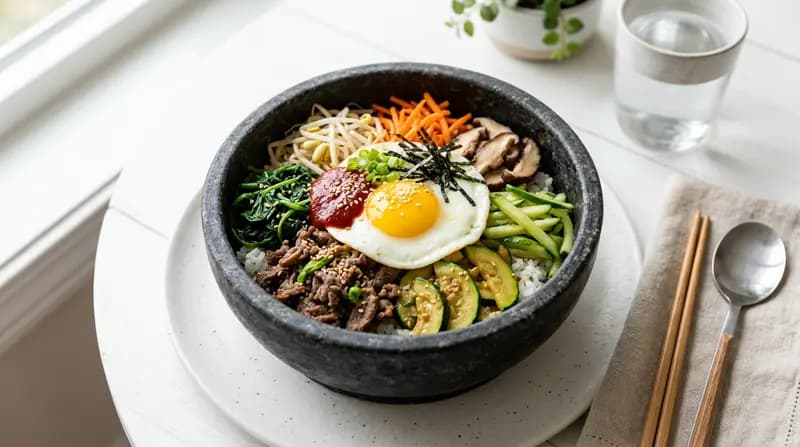
Track calories for Bibimbap with a photo


Common Variations
| Variation | Serving | Calories | Protein | Carbs | Fat |
|---|---|---|---|---|---|
| Beef Bibimbap (Standard) | 1 bowl (450g) | 590 | 22g | 85g | 18g |
| Vegetarian Bibimbap with Tofu | 1 bowl (450g) | 480 | 18g | 80g | 10g |
| Dolsot Bibimbap (Hot Stone Pot) | 1 bowl (450g) | 630 | 22g | 85g | 22g |
| Small Portion Bibimbap | 250g | 328 | 12g | 47g | 10g |
Health Benefits
Provides a wide spectrum of vitamins and minerals from the diverse variety of vegetables.
Offers a balanced ratio of macronutrients, making it a complete and satiating meal.
High fiber content from vegetables and optional whole grains supports digestive health.
Nutrition Tips
- Control the amount of gochujang paste added, as it is high in both sugar and sodium.
- Opt for brown rice instead of white rice to increase the fiber content and lower the glycemic index.
- Ask for extra vegetables to increase volume and micronutrient density without significantly raising calories.
- Limit the amount of added sesame oil to reduce the total fat and calorie count of the dish.
- Choose lean protein options like tofu, chicken breast, or extra egg whites to keep saturated fat low.
GAYA Tracking Tip
For the most accurate tracking, take a photo of the Bibimbap before you mix the ingredients together. This allows GAYA to better identify the specific portions of vegetables, protein, and rice.
Frequently Asked Questions
Is Bibimbap a good option for weight loss?+
Yes, it can be an excellent weight-loss meal if you prioritize vegetables, choose brown rice, and limit the high-calorie sauces and oils.
Why is Bibimbap often high in sodium?+
The sodium primarily comes from the gochujang (chili paste), soy sauce used to season the vegetables, and kimchi served on the side.
Does Dolsot Bibimbap have more calories than regular Bibimbap?+
Generally yes, because the stone pot is coated with sesame oil to prevent the rice from sticking and to create a crispy crust, adding extra fat calories.
Track calories for Bibimbap with a photo