
Calories in Mozzarella
Mozzarella is a soft, fresh cheese originating from Italy, traditionally made from buffalo milk, though cow's milk is more common today. It's known for its mild flavor and excellent melting properties, making it a staple in many dishes. Nutritionally, it's a good source of protein and calcium, but also contains significant fat and sodium.
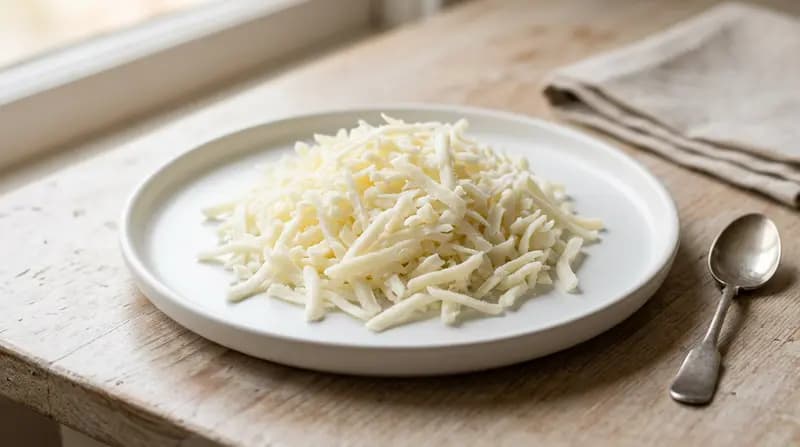
Track calories for Mozzarella with a photo


Common Variations
| Variation | Serving | Calories | Protein | Carbs | Fat |
|---|---|---|---|---|---|
| 1 oz (28g) | 1 oz (28g) | 85 | 6.3g | 0.6g | 6.3g |
| 100 g | 100 g | 300 | 22.2g | 2.2g | 22.4g |
| 6 slices (170g) | 6 slices (170g) | 510 | 37.7g | 3.7g | 38g |
Health Benefits
Rich in Calcium: Supports strong bones and teeth, crucial for skeletal health.
Good Source of Protein: Essential for muscle repair, growth, and overall body function.
Contains Probiotics: Some fresh mozzarella varieties may contain beneficial bacteria that support gut health.
Nutrition Tips
- Pair mozzarella with vegetables like tomatoes and basil for a balanced Caprese salad.
- Opt for part-skim or low-fat mozzarella to reduce calorie and saturated fat intake.
- Be mindful of portion sizes, especially when adding to dishes like pizza or pasta.
- Use fresh mozzarella in salads or as a snack for a protein boost.
- Consider homemade mozzarella for control over ingredients and sodium levels.
GAYA Tracking Tip
For accurate tracking, photograph your mozzarella before it's melted into a dish or mixed with other ingredients. GAYA can better estimate the quantity of solid cheese.
Frequently Asked Questions
Is mozzarella a healthy cheese?+
Mozzarella can be part of a healthy diet, offering protein and calcium. However, it's also high in fat and sodium, so moderation and choosing lower-fat versions are key.
How does fresh mozzarella differ nutritionally from shredded?+
Fresh mozzarella typically has a higher water content, meaning per 100g, it might have slightly fewer calories, fat, and protein compared to low-moisture shredded varieties.
Can I eat mozzarella if I'm lactose intolerant?+
Mozzarella, especially fresh varieties, contains less lactose than many other dairy products due to its production process. Some individuals with mild lactose intolerance may tolerate it better, but it still contains lactose.
Track calories for Mozzarella with a photo