
Calories in Bulgur
Bulgur is a whole wheat product made from parboiled, dried, and cracked wheat kernels. It's a staple in Middle Eastern and Mediterranean cuisines, known for its nutty flavor and chewy texture. Nutritionally, bulgur is a good source of complex carbohydrates, fiber, and plant-based protein, with minimal fat.
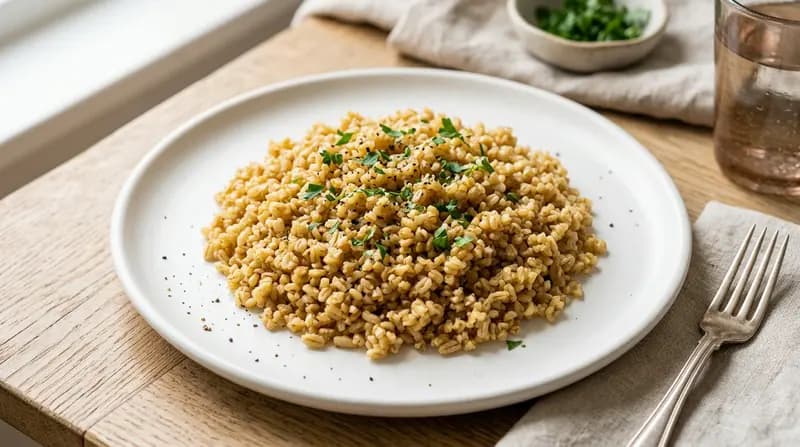
Track calories for Bulgur with a photo


Common Variations
| Variation | Serving | Calories | Protein | Carbs | Fat |
|---|---|---|---|---|---|
| 100 g | 100 g | 83 | 3.1g | 18.6g | 0.2g |
| 1 tbsp (8g) | 1 tbsp (8g) | 7 | 0.3g | 1.6g | 0g |
| 1 oz (28g) | 1 oz (28g) | 24 | 0.9g | 5.3g | 0.1g |
Health Benefits
Rich in Fiber: Promotes digestive health, helps regulate blood sugar levels, and contributes to satiety.
Heart Health: The fiber content and low fat contribute to lower cholesterol levels and reduced risk of heart disease.
Weight Management: High fiber and protein content help you feel full longer, reducing overall calorie intake.
Nutrition Tips
- Combine bulgur with legumes like lentils or chickpeas to create a complete protein meal.
- Use bulgur as a healthy substitute for rice or couscous in various dishes.
- Incorporate bulgur into salads, such as tabbouleh, for added fiber and texture.
- Cook bulgur in vegetable broth instead of water to enhance flavor without adding significant calories.
- Opt for coarse-grain bulgur for a chewier texture and slightly higher fiber content.
GAYA Tracking Tip
For accurate tracking of bulgur dishes, especially those mixed with other ingredients like in a pilaf or salad, photograph your plate from directly above. GAYA can then better identify the bulgur and estimate its quantity relative to other components.
Frequently Asked Questions
Is bulgur gluten-free?+
No, bulgur is made from wheat and therefore contains gluten. Individuals with celiac disease or gluten sensitivity should avoid it.
How does bulgur compare to quinoa nutritionally?+
Both are nutritious whole grains. Quinoa is a complete protein and generally higher in protein and iron, while bulgur is typically higher in fiber and lower in calories per serving.
Can bulgur be eaten raw?+
Bulgur is parboiled during processing, so it's technically pre-cooked. Fine-grain bulgur can be rehydrated by soaking in hot water for a short time, making it suitable for dishes like tabbouleh without further cooking. Coarser grains benefit from simmering.
Track calories for Bulgur with a photo