
Calories in Salmon
Salmon is a highly nutritious fatty fish, renowned for its rich content of omega-3 fatty acids, high-quality protein, and various vitamins and minerals. It's a versatile food often praised for its heart-healthy benefits and anti-inflammatory properties, making it a staple in many healthy diets.
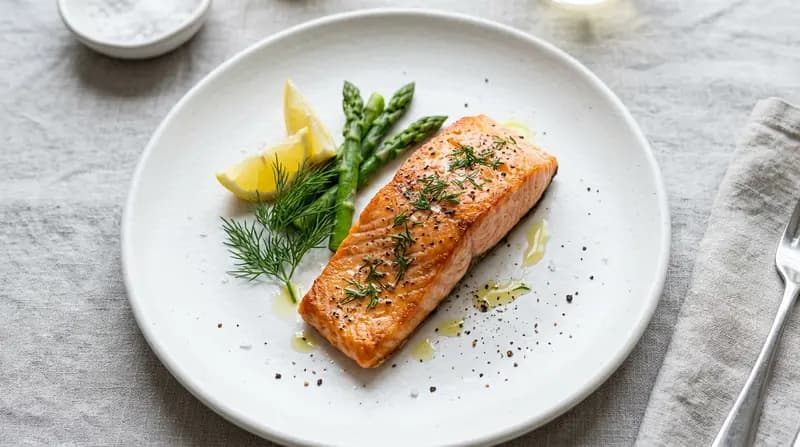
Track calories for Salmon with a photo


Common Variations
| Variation | Serving | Calories | Protein | Carbs | Fat |
|---|---|---|---|---|---|
| 1 oz boneless (28g) | 1 oz boneless (28g) | 41 | 6.1g | 0g | 1.7g |
| 1 serving (57 g) | 1 serving (57 g) | 83 | 12.3g | 0g | 3.4g |
Health Benefits
Rich in Omega-3 Fatty Acids: Supports heart health, brain function, and reduces inflammation.
Excellent Source of Protein: Essential for muscle repair, growth, and overall body function.
High in B Vitamins: Important for energy production, neurological health, and red blood cell formation.
Nutrition Tips
- Choose wild-caught salmon when possible for potentially higher omega-3 content and lower contaminants.
- Bake, grill, or poach salmon to avoid adding excessive unhealthy fats.
- Pair salmon with a generous serving of vegetables to create a balanced and nutrient-dense meal.
- Be mindful of portion sizes, as salmon is calorie-dense due to its healthy fat content.
- Incorporate salmon into your diet 2-3 times a week to reap its full health benefits.
GAYA Tracking Tip
For accurate tracking of salmon, ensure your photo clearly shows the portion size of the fillet. If sauces or marinades are used, try to log them separately or estimate their contribution to the meal.
Frequently Asked Questions
How many calories are in a typical serving of salmon?+
A standard 100-gram serving of cooked salmon typically contains around 200-220 calories, primarily from its healthy fats and protein. This can vary slightly based on the type of salmon (e.g., Atlantic vs. Sockeye) and the cooking method used.
Is salmon good for weight loss?+
Yes, salmon can be beneficial for weight loss due to its high protein content, which promotes satiety and helps preserve muscle mass. Its healthy fats also contribute to feeling full, potentially reducing overall calorie intake when consumed in appropriate portions.
What are the main nutritional benefits of eating salmon?+
Salmon is a powerhouse of nutrition, offering significant amounts of omega-3 fatty acids, high-quality protein, and essential vitamins like B12 and D. It also provides minerals such as selenium and potassium, supporting heart health, brain function, and bone strength.
Track calories for Salmon with a photo