
Calories in Peanut Butter
Peanut butter is a popular spread made from ground, dry-roasted peanuts. It's a rich source of healthy fats, protein, and fiber, making it a satisfying and energy-dense food. It also provides essential vitamins and minerals like magnesium and vitamin E.
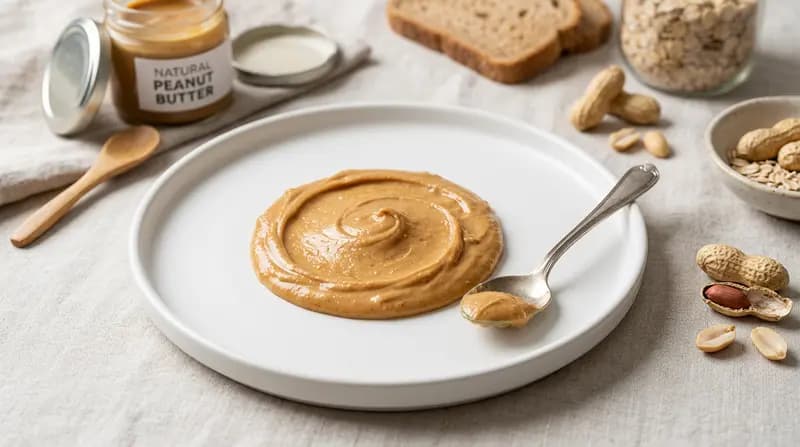
Track calories for Peanut Butter with a photo


Common Variations
| Variation | Serving | Calories | Protein | Carbs | Fat |
|---|---|---|---|---|---|
| 1 tbsp (16g) | 1 tbsp (16g) | 94 | 4g | 3.1g | 8.1g |
| 1 serving (16 g) | 1 serving (16 g) | 94 | 4g | 3.1g | 8.1g |
Health Benefits
Rich in monounsaturated and polyunsaturated fats, which are beneficial for heart health and can help lower bad cholesterol levels.
Provides a good source of plant-based protein, supporting muscle repair, growth, and overall satiety.
Contains dietary fiber, aiding in digestive health, promoting regularity, and helping to stabilize blood sugar levels.
Nutrition Tips
- Choose natural peanut butter with minimal added sugar and oils to maximize health benefits.
- Practice portion control, as peanut butter is calorie-dense; a standard serving is typically two tablespoons.
- Pair peanut butter with fruits (like apples or bananas) or vegetables (like celery) for a balanced and satisfying snack.
- Incorporate peanut butter into smoothies, oatmeal, or yogurt for an extra boost of protein and healthy fats.
- Always check the nutrition label for sodium content, especially if you are monitoring your blood pressure.
GAYA Tracking Tip
For accurate tracking, measure your peanut butter with a spoon or scale rather than estimating, as its density can lead to underestimation of calories and macros.
Frequently Asked Questions
Is peanut butter good for weight loss?+
While calorie-dense, peanut butter can be part of a weight loss diet due to its protein and fiber content, which promotes satiety. Portion control is crucial to avoid excess calorie intake, as even a small amount can add significant calories.
What's the difference between natural and regular peanut butter?+
Natural peanut butter typically contains only peanuts and salt, with no added sugars, hydrogenated oils, or emulsifiers. Regular peanut butter often includes added sugar, salt, and fully or partially hydrogenated oils to prevent separation and improve texture, which can increase its sugar and unhealthy fat content.
Is peanut butter a good source of protein?+
Yes, peanut butter is an excellent plant-based protein source, providing about 8 grams of protein per two-tablespoon serving. This makes it a valuable addition for vegetarians, vegans, or anyone looking to increase their protein intake, supporting muscle health and overall body functions.
Track calories for Peanut Butter with a photo