
Calorie Tracking for Menopause
A practical guide to using calorie tracking during perimenopause and menopause, with a focus on weight changes, symptom-aware routines, bone health, and healthy aging.
GAYA Editorial TeamReferences
⚡ Common Struggles
- Weight changes after menopause, which may be linked to lower estrogen, slower metabolism with age, lower activity, and loss of muscle mass.3
- Trying to match old eating habits to current needs even though older women usually need fewer calories for energy.3
- Feeling overwhelmed by conflicting advice about menopause, healthy weight, and symptom relief.5
- Hot flashes, sleep problems, fatigue, and mood changes that can make routines harder to maintain.2,4,6
🎯 Key Considerations
- Older women usually need fewer calories for energy, and age-related muscle loss can contribute to weight changes.3
- Lower estrogen after menopause increases bone loss risk, so calcium and vitamin D become especially important.1,3,7
- Daily calorie needs depend on age, height, weight, and activity level.3
- Even with lower calorie needs, you still need vitamins, minerals, fiber, and other essential nutrients.3,7
Why Calorie Tracking Matters During Menopause
Menopause is a normal part of life, but the years around it can bring changes in symptoms, weight, and long-term health risks.1,4,5,6 After menopause, estrogen levels are very low. Lower estrogen and aging-related changes can raise the risk of osteoporosis, heart disease, and stroke, and many women gain some weight after menopause.1,3,4,6
Older women usually need fewer calories for energy, so calorie tracking can be a practical way to stay aware of how your intake compares with your current needs.3 One useful approach is to compare your usual intake with calorie estimates based on age, height, weight, and activity level.3
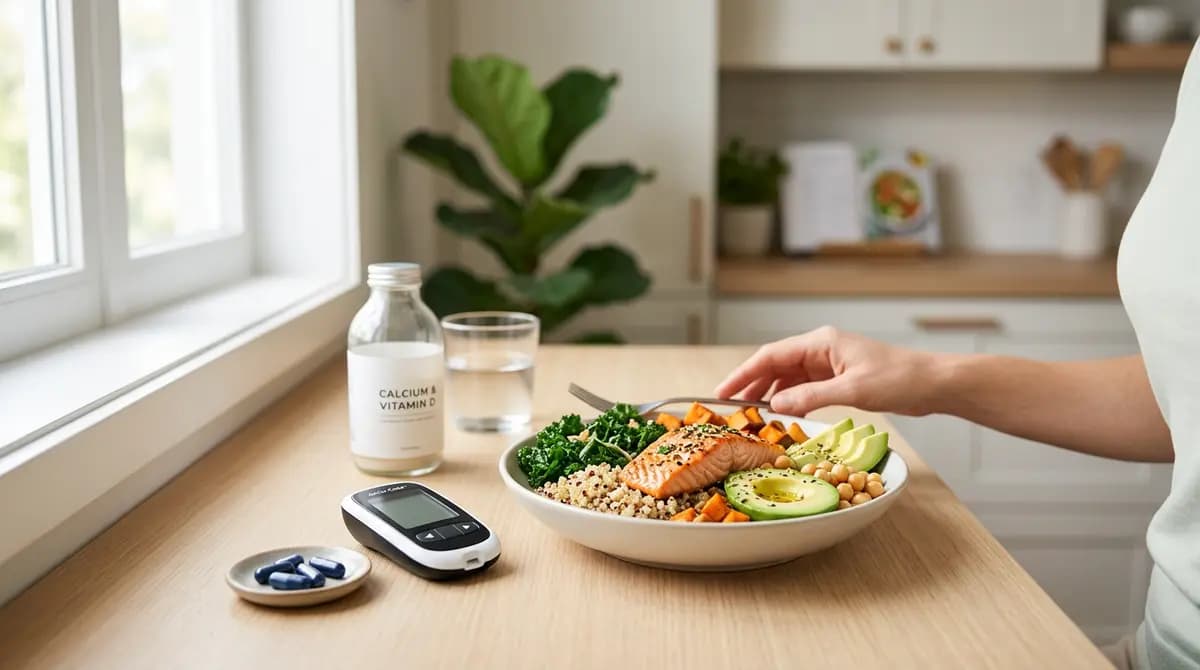
Start tracking with a photo


Getting Started with Calorie Tracking for Menopause
Start with a calorie estimate based on age, height, weight, and activity level, since these factors affect daily energy needs.3 If you use an app, a notebook, or notes on your phone, choose a method that is simple enough for you to keep using.
As you review your log, remember that eating well still matters even when calorie needs are lower. Older women still need vitamins, minerals, fiber, and other essential nutrients.3 If you are dealing with heavy bleeding, hot flashes, sleep problems, urinary symptoms, or bleeding after menopause, contact a health care provider.1,2,6,7
💡 Pro Tips
- Use calorie estimates based on age, height, weight, and activity level as a starting point.3
- Aim for nutrient-rich choices even if you are trying to reduce calories.3
- Bring bothersome symptoms or unusual bleeding to a health care provider.1,2,6
- Ask about treatment options if hot flashes or sleep problems are affecting daily life.2,7,8
Managing Macronutrients for Menopausal Health
During and after menopause, nutrition quality matters as much as calorie totals. Guidance for older women emphasizes vitamins, minerals, fiber, and other essential nutrients, even though calorie needs are often lower than before.3 A healthy eating pattern can center on vegetables, fruits, whole-grain foods, and other nutrient-rich choices.7
Bone health deserves special attention. Less estrogen after menopause causes faster bone loss, which raises the risk of osteoporosis.1,3,4,6 Women 51 and older should get 1,200 milligrams of calcium each day, and vitamin D is also important for bone health.3 If you are considering supplements, talk with your health care provider about what you may need.3,4
💡 Pro Tips
Overcoming Common Challenges in Menopause Calorie Tracking
Menopause symptoms can make daily habits harder to maintain. Hot flashes, night sweats, sleep problems, fatigue, and mood changes are all common around the transition.2,4,6,8 When that happens, it helps to keep your routine practical and focus on the basics that current guidance emphasizes: regular physical activity, good sleep habits, and symptom relief when needed.2,3,4
If hot flashes are a problem, it may help to note common triggers. Practical strategies include dressing in layers, using a fan, drinking cold water, and noticing whether spicy foods, alcohol, caffeine, stress, or hot environments seem to set symptoms off.2,4,7 If symptoms are frequent, disruptive, or you have bleeding after you have gone a year without periods, talk with a health care provider.1,2,7
💡 Pro Tips
Advanced Tips for Sustainable Calorie Management
For a sustainable approach, pair calorie tracking with the long-term habits recommended during and after menopause. Getting at least 30 minutes of physical activity on most days supports your bones, heart, and mood, and muscle-strengthening or weight-bearing exercise is recommended on two days each week.3 These habits matter because menopause and aging can increase the risk of osteoporosis, heart disease, stroke, and some bladder problems.1,3,4,6
It also helps to revisit your calorie target from time to time. Daily calorie needs are based on age, height, weight, and activity level, so a change in routine or body weight may mean your old estimate no longer fits.3 Keep up with regular checkups and screening tests as well, since healthy aging after menopause is broader than weight alone.3
Your Action Checklist
Use a daily calorie estimate based on age, height, weight, and activity level as your starting point.3
essentialDo muscle-strengthening and weight-bearing exercise on two days each week.3
recommendedAim for at least 30 minutes of physical activity on most days.3
recommendedTrack possible hot flash triggers if you notice patterns.2
recommendedoptional
Common Mistakes to Avoid
Frequently Asked Questions
Does my metabolism really slow down during menopause, and how much?+
Weight gain after menopause is common, and many women gain an average of about 5 pounds. Lower estrogen may play a role, but weight gain can also relate to metabolism slowing with age, lower activity, and loss of muscle mass.3 Older women usually need fewer calories for energy, so it can help to compare your current intake with calorie estimates based on age, height, weight, and activity level.3
How much protein do I actually need during menopause to prevent muscle loss?+
Current menopause guidance emphasizes overall diet quality and physical activity more than a single protein target. Older women usually need fewer calories, but they still need vitamins, minerals, fiber, and other essential nutrients, and muscle-strengthening exercise is recommended on two days each week.3 A balanced eating pattern and regular strength-focused activity are key foundations.3
Can calorie tracking help with menopausal symptoms like hot flashes?+
It may help you notice whether symptoms line up with common triggers. Guidance commonly mentions spicy foods, alcohol, caffeine, stress, and hot environments as possible hot-flash triggers for some women.2,4 If hot flashes are frequent or disruptive, talk with your health care provider about treatment options.2,7,8
What role does bone health play, and how can calorie tracking help?+
Bone loss speeds up after menopause because lower estrogen leads to faster bone mass loss, which raises osteoporosis risk.1,3,4,6 Women 51 and older should get 1,200 milligrams of calcium each day, and vitamin D is also important for bone health.3,7 Weight-bearing and muscle-strengthening exercise also help support bone health.3,7
Is carb restriction necessary during menopause for weight management?+
Guidance during and after menopause emphasizes overall diet quality, including vegetables, fruits, whole grains, and enough fiber, vitamins, and minerals.3,7 If you are tracking calories, it makes sense to use that information to support an overall healthy eating pattern rather than relying on a single food rule.3,7
How often should I adjust my calorie goals as I track during menopause?+
A practical approach is to revisit your calorie estimate when your activity level, weight, or routine changes, since calorie needs are based on age, height, weight, and activity level.3
References
- Menopause basics — Office on Women's Health
- Menopause symptoms and relief — Office on Women's Health
- Menopause and your health — Office on Women's Health
- Menopause — MedlinePlus
- Menopause — Office on Women's Health
- Menopause — Eunice Kennedy Shriver National Institute of Child Health and Human Development
- What are the treatments for other symptoms of menopause? — Eunice Kennedy Shriver National Institute of Child Health and Human Development
- Hormone Replacement Therapy — MedlinePlus
Start tracking with a photo