
Calorie Tracking for Mediterranean Diet
This guide helps followers of a Mediterranean-style eating pattern track calories in a practical, balanced way so they can support weight-related goals while keeping the focus on whole, nutritious foods, enjoyable meals, and long-term consistency.
GAYA Editorial TeamReferences
⚡ Common Struggles
- Estimating portions of oils, nuts, seeds, snacks, and other foods that can add calories quickly.5,7
- Keeping track during restaurant meals, family gatherings, work events, or other social situations.5,7
- Balancing calorie goals with a plan that still feels enjoyable and realistic over time.2,5,6
- Staying consistent after busy days, overeating, or other setbacks.5,7
🎯 Key Considerations
- Even nutritious foods still count toward total calories, so overall intake matters for weight loss or weight maintenance.2,5,7
- A healthy eating plan should include a variety of foods such as vegetables, fruits, whole grains, beans, lentils, seafood, nuts, seeds, and certain oils.2,5
- Foods and drinks high in added sugars, saturated fat, sodium, or alcohol are worth keeping an eye on when you track.2,3,5
- Portion size and regular monitoring can help you notice patterns and catch setbacks early.5,6,7
Why Calorie Tracking Matters for Your Mediterranean Journey
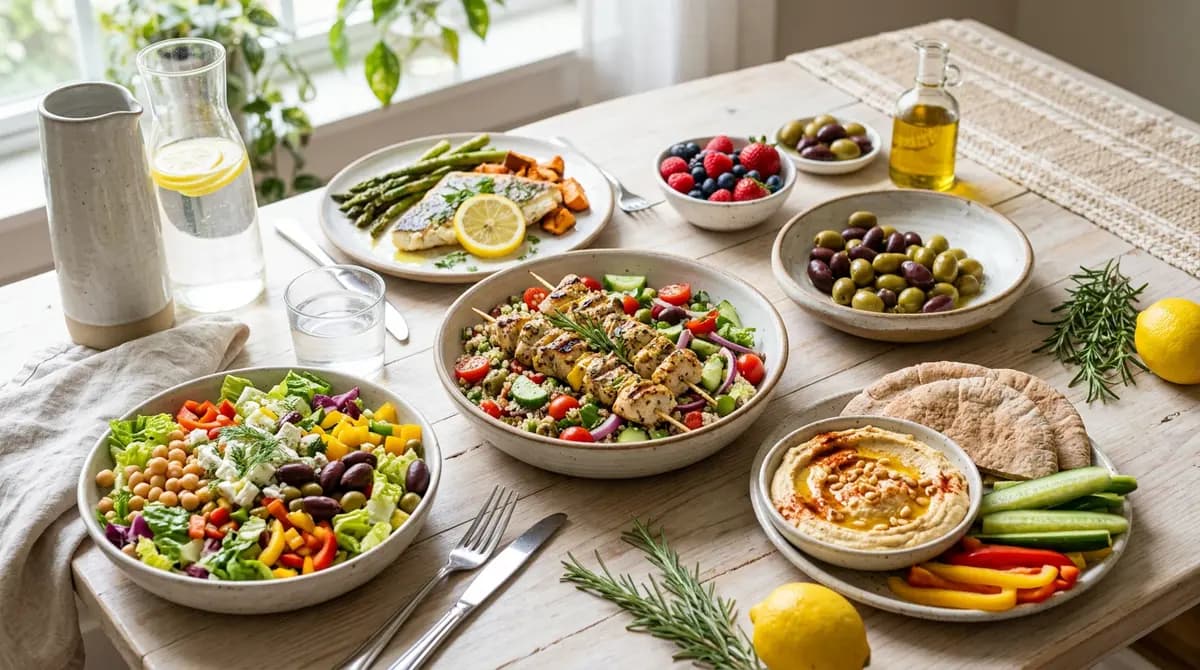
A Mediterranean-style eating pattern can include many nutritious foods, and current healthy-eating guidance emphasizes prioritizing whole, healthy, nutritious foods and building meals from vegetables, fruits, whole grains, beans, lentils, seafood, nuts, seeds, and oils such as olive oil.1,2,5 If your goal is to lose weight or maintain weight, calories still matter because weight is affected by the balance between calories taken in and calories used through daily living and physical activity.5,7
Tracking can help you notice portion sizes, eating patterns, and places where calories may add up. It can also support realistic goals and regular follow-through without requiring an overly strict approach to eating.2,5,6,7
💡 Pro Tips
- Use tracking to notice patterns and support realistic goals, not to make your eating plan overly strict.2,5,6
- Remember that foods often seen as healthy, including oils, nuts, seeds, and avocados, still count toward total calories.5,7
- Aim for variety across vegetables, fruits, whole grains, beans, lentils, seafood, protein foods, nuts, seeds, and oils.2,5
- If you have a medical condition or other health concerns, ask a health care professional for individual guidance on weight and activity goals.6,7,8
Start tracking with a photo


Getting Started with GAYA: Your Mediterranean Calorie Companion
Starting with GAYA can be as simple as entering your current details and your goal, then using the app consistently to monitor your intake and progress. Calorie needs vary based on factors such as age, sex, health, and goals, so any target works best as a starting point rather than a rigid rule.3,6,7 If you have a health condition, take medicines that affect weight, or want a more tailored plan, a health care professional may help you choose a safer approach and may refer you to a registered dietitian.6,7
As you begin, log foods and beverages as consistently as you can. Tracking tools and apps can help you follow what you eat, your physical activity, and your weight, which may help you stay motivated and see where changes are needed over time.5,6,7
💡 Pro Tips
- Log foods and beverages regularly so you can see intake patterns more clearly over time.5,6
- Pay attention to extras such as oils, snacks, sweets, and alcohol, since they can affect your total calorie intake.2,5,7
- Use GAYA to keep your food, activity, and progress in one place if that helps you stay organized.5,6,8
- If you have a setback, restart at the next meal or next day instead of giving up on the plan.5,7
Navigating Macronutrients in the Mediterranean Diet
Rather than chasing a precise macro split, focus on a balanced eating plan that gives your body the energy and nutrients it needs each day, including carbohydrates, protein, fats, vitamins, minerals, and water.2 Carbohydrates are a main source of energy, and choosing mostly whole grains and other fiber-rich plant foods can help you get more nutrients and fiber.3
Protein foods such as seafood, lean meats, poultry, beans, peas, lentils, nuts, seeds, soy products, and low-fat dairy can all fit into a healthy eating plan.2,5 Oils such as olive oil and oils found in seafood, nuts, and avocados can also be part of a healthy pattern, but total calories still matter when weight control is one of your goals.5,7
💡 Pro Tips
- Choose mostly whole grains instead of refined grains when you eat grain foods.3
- Include fiber-rich foods such as fruits, vegetables, beans, lentils, nuts, seeds, and whole grains.2,3
- Build meals around a mix of carbohydrate foods, protein foods, and fats that you can enjoy and maintain over time.2,5,6
- If you want individualized calorie or macronutrient targets, ask a health care professional or registered dietitian for help tailoring them to your needs.6,7
Overcoming Common Calorie Tracking Challenges on the Mediterranean Diet
A common challenge with calorie tracking is that restaurant meals, family gatherings, work events, and other social occasions are harder to estimate.5 Portions may be larger than expected, and snacks or other higher-calorie options can be easy to overlook.5,7 Foods that fit a healthy eating pattern can still contribute meaningful calories, so it helps to stay aware of amounts rather than assuming that healthy automatically means unlimited.2,5,7
Another challenge is consistency. Missing entries after a busy day or after overeating can make it harder to spot patterns, but setbacks are normal. The most helpful step is usually to regroup and return to your healthy eating plan as soon as you can.5,7
💡 Pro Tips
- When eating out or at events, make your best estimate and move on; consistency matters more than perfection.5,7
- Try to eat meals and snacks more mindfully, such as sitting down at a table instead of grazing, if that helps you notice intake more clearly.5
- Keep higher-calorie snack foods less visible at home or work if they tend to derail your plan.5
- After a high-intake day, refocus on your usual routine rather than quitting altogether.5,7
Advanced Strategies for Mediterranean Calorie Mastery
Once tracking feels routine, focus less on perfect numbers and more on habits you can maintain over time.5,6 A helpful next step is choosing more nutrient-rich foods while limiting foods and drinks that are high in calories but low in nutrition.2,3,7 Balanced eating, regular physical activity, adequate sleep, and stress relief can all support long-term health habits and weight-related goals.4,5,7
Regular physical activity supports both health and weight management. Healthy adults are generally advised to aim for at least 150 minutes a week of moderate-intensity aerobic activity and muscle-strengthening activities on 2 or more days a week, with gradual progression as needed.5,8 If you are working to maintain weight loss, more activity may be helpful over time.5,6
💡 Pro Tips
- Prioritize foods that give you more nutrition for the calories you eat.3,7
- Set specific, realistic goals for eating and activity instead of vague goals.5,6,8
- Use support from friends, family, groups, or health professionals if you need help staying consistent.5,6,8
- Build up activity gradually and choose forms of movement you can keep doing regularly.5,8
Your Action Checklist
Choose a calorie target and eating plan you can maintain over time, and get professional help if you have health conditions or concerns.5,6,7
essentialInclude a variety of vegetables, fruits, whole grains, beans, lentils, seafood or other protein foods, nuts, seeds, and oils.2,5
recommendedrecommended
Aim for regular physical activity that is appropriate for you, including about 150 minutes per week of moderate-intensity aerobic activity if possible, plus muscle-strengthening work 2 or more days a week.5,8
recommendedoptional
Common Mistakes to Avoid
Frequently Asked Questions
Is the Mediterranean Diet inherently low-calorie?+
How do I accurately track olive oil, which is so central to Mediterranean cooking?+
What about tracking wine, a common component of the Mediterranean lifestyle?+
How can I track calories effectively when dining out at a Mediterranean restaurant?+
Will calorie tracking make the Mediterranean Diet feel too restrictive or take away from its joy?+
How do I account for seasonal variations in fruits and vegetables when tracking?+
References
- Dietary Guidelines for Americans, 2025-2030 — U.S. Department of Agriculture and U.S. Department of Health and Human Services
- Nutrition — MedlinePlus
- Carbohydrates — MedlinePlus
- Healthy Eating & Physical Activity for Life — National Institute of Diabetes and Digestive and Kidney Diseases
- Eating & Physical Activity to Lose or Maintain Weight — National Institute of Diabetes and Digestive and Kidney Diseases
- Choosing a Safe & Successful Weight-loss Program — National Institute of Diabetes and Digestive and Kidney Diseases
- Weight Control — MedlinePlus
- Exercise and Physical Fitness — MedlinePlus
Start tracking with a photo